Key Takeaways
- Cut pack time by using padded bubble mailers for apparel, books, and small accessories that don’t need box-level structure; a self-seal mailer can shave seconds off each order and keep 3-day shipping on track.
- Compare total shipping cost, not just unit price, when choosing padded bubble mailers versus boxes; lighter mailers often reduce postage, tape use, and labor on high-volume orders.
- Match product shape to the mailer before buying in bulk; padded bubble mailers work well for flat, non-fragile items, but sharp corners, thick stacks, and crush-prone goods usually need boxes.
- Choose the right mailer material for the job; poly padded mailers handle wet weather and rough sorting better, while kraft envelopes may suit brands that want a paper look and easy label application.
- Test padded bubble mailers in a small batch with real shipping labels, return labels, and carrier scans before a full switch; clean label placement, fewer dimensional issues, and lower damage rates are what matter.
- Buy padded bubble mailers in the sizes you actually use most, not every size on the shelf; a tighter size mix reduces waste, keeps packages flatter, and lowers per-order mailing cost faster than most sellers expect.
Three-day fulfillment used to feel fast. Now it’s the baseline, and every extra 20 seconds at the pack table shows up in labor cost, cutoff misses, and late scans. That’s why padded bubble mailers are getting a second look from ecommerce teams that ship apparel, books, and small accessories—especially sellers trying to move more orders without adding a bigger box wall, more tape, or another pair of hands.
In practice, the appeal is simple. A self-seal mailer is quicker to pack than a carton, lighter to mail than most boxes, — often easier to store in bulk on a crowded floor. But the honest answer is, they’re not a blanket fix. Some products fly through pick-pack in a padded mailer and arrive clean; others get crushed at the corners, trigger return headaches, or lose the postage savings once dimensions and carrier rules enter the picture. That gap—between what looks cheap and what actually works—is where smart operators are paying attention right now.
Why padded bubble mailers fit the speed demands of 3-day fulfillment
A 300-order apparel brand cuts off orders at 2 p.m. By 4 p.m., two packers have cleared the queue because padded bubble mailers seal fast, stack cleanly, and don’t slow the table with extra tape or filler. That’s the operational point: speed at the pack station matters as much as postage.
How pack stations save seconds per order with self-seal padded mailers
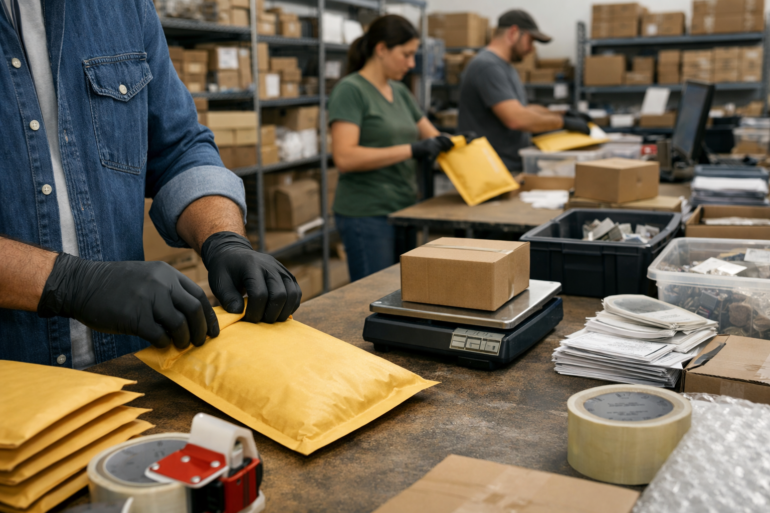
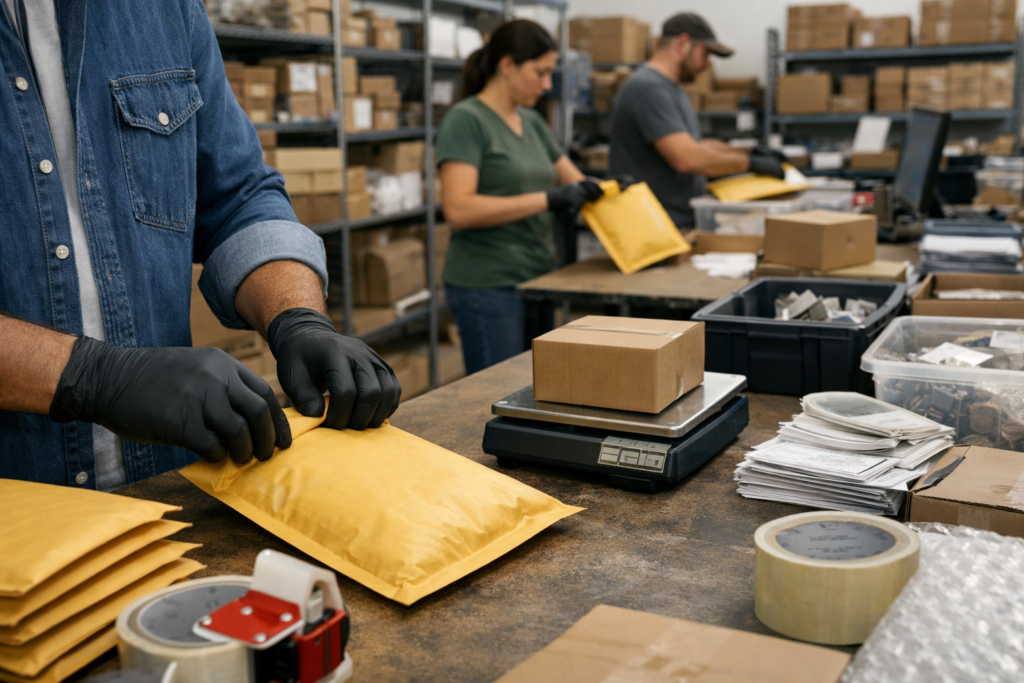
In practice, self-seal padded bubble mailers remove three motions—build a box, add fill, tape the seam. Across 200 orders, saving even 12 seconds per order gives back 40 minutes of labor (enough time to clear late-day return and label work). For soft goods and flat accessories, poly bubble mailers also keep envelopes, stamps, and mailing supplies simpler to stage in bulk.
- Less setup: peel, pack, press
- Less space: more mailers fit at one station
- Fewer touchpoints: faster first pass through shipping
Why lighter mailers can trim postage cost on apparel, books, and accessories
Weight drives cost. A kraft bubble mailer or one of the heavier kraft paper bubble mailers can still land below the shipped weight of small boxes, which helps on first class or flat rate decisions through USPS. For books, tees, small bags, and prepaid return kits, that difference adds up fast—especially on bulk order days.
Where padded bubble mailers beat boxes in same-day pick-pack workflows
Boxes still make sense for crush risk. But for non-fragile SKUs under 5 lb, padded bubble mailers often win on speed, storage, and print handling. Teams comparing mailer box options with branded printing and sizing should map each mailer, envelope, or box to item type, not habit.
How ecommerce sellers should compare padded bubble mailers against boxes
About 7 out of 10 orders in apparel, books, and soft accessories don’t need a corrugated box at all—and that’s where padded bubble mailers change the math on speed, postage, and storage. In practice, a flat mailer packs faster, takes less shelf space, and often trims parcel cost once a shipping label is print-ready.
Which products are a safe fit for padded bubble mailers and which are not
Safe fits are simple. Think T-shirts, leggings, scarves, paperback books, phone cases, and small accessories under 5 lb.
Risk starts with shape and rigidity—sharp corners, pressure points, or crush-sensitive goods push sellers toward boxes. Poly bubble mailers work well for weather resistance, while kraft bubble mailer stock suits brands that want a paper look. Some teams also keep kraft paper bubble mailers for lighter mail, returns, and low-cost first class orders.
How package dimensions, flat profile, and carrier rate rules change shipping cost
Small changes matter. A mailer that stays flat can avoid the extra cubic hit that large boxes trigger, especially on cheap bulk orders moving through USPS or other mail networks.
- Flat profile: lower dim exposure
- Less filler: lower pack time
- Smaller sizes: easier to order, store, and return
That’s why growing brands compare mailers against mailer box options with branded printing and sizing by total shipped cost, not unit cost alone.
Why damage prevention depends on item shape, edge pressure, and void space
Here’s what most people miss: bubble doesn’t fix bad fit. If the envelope has excess void space, the item slides, edges press through, and damage claims climb.
No shortcuts here — this step actually counts.
A blunt rule works better—if the item can bend, crack, or dent under thumb pressure, box it. If it’s flexible, low-profile, and fills the padded mailer cleanly (without bulging), a mailer is usually the better shipping choice.
What buyers need to know before ordering padded bubble mailers in bulk
Bulk mistakes get expensive fast.
Three-day fulfillment leaves no room for bad size picks, torn envelopes, or labels slapped over seams. The fix is simple: match material, size, and print choices to the item, the mail stream, and the return flow before the first order goes out.
How to choose kraft or poly padded mailers by weather exposure and handling risk
For books, accessories, and other non-fragile goods, padded bubble mailers work best when the outer layer fits the trip. A kraft bubble mailer looks familiar and prints clean, but poly bubble mailers hold up better in rain, porch drops, and rough mail handling—especially for first class and flat rate shipping runs.
Sellers comparing material should check:
Let that sink in for a moment.
- Kraft for dry indoor storage and lower-cost mailing
- Poly for wet weather, scuff resistance, and return use
- Seal strength for bulk order consistency
Which padded bubble mailer sizes reduce waste and keep label placement clean
Bad fit drives cost.
A mailer that leaves 2 to 3 inches of dead space often needs extra bubble or paper fill, while a too-tight envelope can burst at the side seam. For USPS labels, sellers should leave one flat panel clear for the shipping label — stamps, with no fold, flap, or print crossing the barcode zone.
When custom print, black or white exterior options, and return-friendly features make sense
Branding matters less than speed until volume rises past about 200 to 300 orders a week. At that point, black or white exteriors can tidy presentation, — kraft paper bubble mailers can support a cleaner custom print look for mailing programs with simple label placement.
And for sellers comparing bags and boxes, mailer box options with branded printing and sizing make more sense only when the item needs stacking strength or a sharper unboxing moment.
The numbers behind padded bubble mailers in commercial fulfillment
Is switching from boxes to padded bubble mailers really worth it for 3-day fulfillment? Usually, yes—if the product is soft, flat, or low-break risk, the math gets clear fast.
A simple cost model for mailers, boxes, tape, and labor per 100 orders
For 100 orders, a basic box setup can run about $58 for boxes, $9 for tape, and 85 to 110 labor minutes. A run of padded bubble mailers often lands closer to $24 to $36 total, with no extra tape and 35 to 50 labor minutes. That gap matters.
- Boxes: higher material and packing time
- Mailers: lower weight, faster packout
- Labor: even 30 seconds saved per order adds up
For apparel, books, and small accessories, poly bubble mailers and a kraft bubble mailer both work well, while kraft paper bubble mailers fit brands that want a paper-forward look.
How USPS first class, flat rate, and large envelope rules affect mailer decisions
USPS rules still drive the call. If a mailer stays thin and flexible, it may move as a large envelope or flat instead of a parcel, which can trim cost. Once the bubble, label, or contents make it rigid or thick, it shifts into package pricing—sometimes first class, sometimes another mail class, no matter how cheap the envelope looked at order time.
And that’s where most mistakes happen.
Why bulk and wholesale buying changes per-unit cost faster than most sellers expect
Bulk buying changes the curve fast. A seller buying 100 mailers online may pay 38 cents each; at 1,000 units, that can drop near 19 cents. For brands comparing boxes against mailer box options with branded printing and sizing, that price swing—plus labor—usually decides the format.
Why padded bubble mailers are showing up in more fulfillment plans right now
Over coffee, the plain answer is this: faster fulfillment leaves less room for fussy pack stations. For sellers pushing 3-day shipping, padded bubble mailers often beat boxes on speed, space, and postage.
Rising pressure on 3-day delivery promises and faster pack-out choices
Pick-pack teams feel it first. A box usually needs tape, void fill, a shipping label, and extra seconds at every order; a mailer can go from shelf to seal in under 15 seconds for apparel, books, and small accessories. That gap matters—especially during bulk order spikes, return season, or prepaid mailing campaigns where first class and flat rate choices affect cost fast.
- Less handling: fewer touches at the station
- Lower cube: more units fit on a cart
- Cleaner postage math: easier to compare USPS mail classes, stamps, and envelope-style rates
How right-sized mailing supplies cut excess packaging without slowing the line
Right-sizing is where the savings show up. Poly bubble mailers work well for soft goods, while a kraft bubble mailer or kraft paper bubble mailers can suit brands that want a paper-facing mailer without jumping straight to boxes. Smaller padded bubble mailers also reduce dunnage, lower dim exposure, and keep large envelopes from looking half empty.
What smart operators test first before switching from boxes to padded bubble mailers
They don’t switch blind—they run a short test. Usually 50 to 100 shipments.
Let that sink in for a moment.
- Check product fit across sizes
- Track damage, return, and label scan issues
- Compare pack time against current boxes
And if a product needs more shelf presence, some teams keep mailer box options with branded printing and sizing for giftable orders, while shifting everyday shipping to padded mailers.
Frequently Asked Questions
Does the USPS give free bubble mailers?
USPS does offer some free Priority Mail and Flat Rate padded envelopes, but they aren’t free for any mailing method a seller wants. They must be used with the matching USPS service, so they don’t work as a free source of padded bubble mailers for First Class-style shipping or custom brand packing.
Where’s the cheapest place to buy bubble mailers?
The cheapest source depends on volume. For small test runs, retail stores and online marketplaces can work, but the per-mailer cost is usually higher; for bulk or wholesale orders, direct packaging sellers usually beat retail once shipping is added in. The honest answer is simple: compare unit price, case quantity, and freight together—not the sticker price alone.
Does Dollar Tree have bubble mailers?
Sometimes, yes, but stock is hit or miss and sizes are limited. That’s fine for an emergency order of one or two padded bubble mailers, not for an ecommerce shipping setup that needs the same mailer, label placement, and pack speed every day.
What is the difference between a padded mailer and a bubble mailer?
A bubble mailer is a type of padded mailer. “Padded mailer” is the broad term; it can mean bubble-lined envelopes, paper-padded mailers, or fiber-filled mailing bags, while padded bubble mailers use an outer envelope with bubble cushioning inside.
Are padded bubble mailers cheaper than boxes?
Usually, yes—especially for apparel, books, small accessories, and other non-fragile goods under a few pounds. They weigh less, pack faster, and often lower postage compared with boxes, but once an item can bend, crush, or needs a premium presentation, a corrugated mailer box tends to win.
What sizes of padded bubble mailers should small ecommerce sellers keep on hand?
Most growing shops do well with three core sizes: one small mailer for jewelry or slim accessories, one mid-size for folded apparel, and one large format for books or multi-item orders. Keeping too many sizes sounds smart, but it slows packing and creates dead inventory—three to five sizes covers most catalogs well.
Most guides gloss over this. Don’t.
Can padded bubble mailers be used for books?
Yes, for lighter books or paperbacks in good condition. But here’s the thing: padded bubble mailers won’t stop corner crush on heavier hardcovers, collectible books, or sets, so those orders usually need stiffeners, cardboard inserts, or boxes.
Can sellers print or custom brand padded bubble mailers?
Yes, custom print options are common in both poly and paper-based mailers, and they can make a plain shipping package look a lot more intentional. Sellers should keep artwork simple—logo, return address, one color if budget matters—because every extra print choice raises cost fast.
Do padded bubble mailers need stamps, or should sellers buy postage online?
For ecommerce, buying postage online is the better move. Stamps and forever stamp combinations can work for very light mail, postcards, or occasional envelopes, but online labels give cleaner tracking, faster batch processing, and fewer pricing mistakes at the mail counter.
Are padded bubble mailers good for returns?
They can be, if the item is non-fragile and easy to refold. A padded bubble mailer with a clean return label area works well for apparel and soft goods, but for anything that needs to come back in resale-ready shape, a reusable mailer or sturdy box is usually the safer call.
What’s driving the shift is pretty simple: speed, postage, and fit. For sellers working inside a 3-day fulfillment window, padded bubble mailers can shave handling time at the pack table, cut package weight, and reduce the wasted air that often turns a small order into an overpriced shipment. That doesn’t make them the right pick for every SKU. Sharp corners, crush risk, and awkward shapes still push plenty of orders back into boxes, where structure matters more than pack speed.
But for apparel, soft accessories, slimmer books, — other low-breakage items, the math is getting harder to ignore—especially once labor, tape, and dimensional charges are counted together instead of treated as separate costs. That’s where smart operators are winning. They’re not replacing every box. They’re testing the right product groups, in the right sizes, with clean label space and fewer packing steps.
The next move should be practical: pull the last 100 orders for one low-damage category, compare box costs against padded bubble mailers line by line, and run a two-week pack-out test before the next bulk supply order is placed.
For more, check out How Real Estate Investors Should Calculate Their Net Worth.
You may also like Your Guide to Hiring a Trustworthy Real Estate Agent.