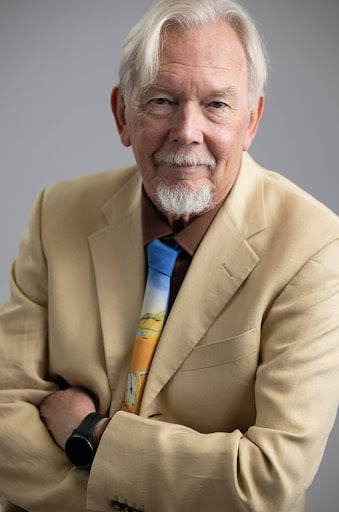
When Andre Walton’s phone rang twice in rapid succession at Chicago’s McCormick Place, he had no idea those back-to-back calls would expose the dangerous cognitive trap that afflicts high-performing professionals everywhere. The first call delivered news of his stepfather’s death. The second revealed his general manager had relapsed into alcoholism and required immediate rehab. The trade show went on. Business continued to thrive. And Walton, a psychologist and inventor who had built a technology company that doubled annually, descended into serious burnout.
What Dr. Walton discovered in his recovery wasn’t just another wellness protocol or time management system. Instead, he identified a fundamental imbalance in how some drivenpeople think—an imbalance that makes burnout almost inevitable, regardless of workload or stress management techniques.
“Burnout’s arrival isn’t always dramatic,” Walton explains. “It creeps in quietly, drains focus, shrinks your world, and traps your thinking like a hamster in a wheel.”
The Creative Capacity We Abandon
Walton’s insight begins with an observation most people overlook: creativity isn’t about the end products we celebrate—electric cars, voice assistants, or smartphones. These are merely artifacts. What matters is the thinking process that generates them, a fundamentally human curiosity that drove social evolution from the spear and wheel to artificial intelligence.
He witnessed this creative drive firsthand watching his granddaughters as young children. They approached new objects with experimentation and curiosity, using them to construct meaning without templates or predetermined outcomes. They were building a jigsaw puzzle with no picture on the box.
Adults function differently. When confronting new situations, we immediately search our memory for templates—prior experiences in similar circumstances that can guide current action. This pattern-matching efficiency conserves tremendous mental energy and accelerates decision-making.
But efficiency exacts a hidden price.
The Thinking Imbalance That Enables Burnout
Walton’s professional journey illustrated this cost with painful clarity. After patenting inventions that earned coverage on BBC’s Tomorrow’s World, he launched his technology company to immediate international interest. Then a UK recession eliminated licensing deals and incoming calls virtually overnight. Years later, after rebuilding the business in Florida into a rapidly scaling operation that sent him to trade shows worldwide, external success masked internal deterioration.
The revelation that emerged from his burnout experience challenged conventional wisdom about high performance. Burnout, Walton discovered, isn’t primarily about workload volume. It stems from how we think.
Modern professional life demands constant convergent thinking—the analytical, deductive, drill-down focus that solves defined problems efficiently. This cognitive mode dominates contemporary work culture because it produces measurable results quickly. But healthy cognition requires balance.
“We need divergent, creative thinking to expand our possibilities, allow us to step back and see the bigger picture, and make non-logical connections between ideas,” Walton notes. “When we see more possibilities, powerful things return, like hope and options.”
The relationship operates inversely: as creativity expands us, burnout shrinks.
The Three-Possibility Question
Walton’s solution isn’t theoretical. It’s a practical intervention that interrupts the convergent-thinking dominance that precedes burnout. When facing any decision, he recommends asking: What are three other possibilities I haven’t considered?
This deceptively simple question accomplishes something neurologically significant. It forces the brain out of pattern-matching mode and into generative thinking. Rather than searching for the familiar template, the mind must create new options. This cognitive shift doesn’t just produce better decisions—it builds new neural pathways that strengthen creative thinking capacity over time.
The practice creates what Walton calls “an entire landscape of options” where previously only narrow tunnels existed. Those expanded possibilities restore agency and control, the very resources that burnout depletes.
Beyond Innovation to Resilience
The implications extend beyond productivity or creative output. When professionals rebalance their thinking—combining analytical focus with creative possibility—they don’t merely become more innovative. They become fundamentally more resilient.
This reframing positions creativity not as a luxury for designated brainstorming sessions but as essential mental infrastructure for sustainable high performance. The same cognitive capacity that generated human civilization’s greatest advances also protects individuals from the psychological deterioration that threatens modern knowledge workers.
Walton’s message challenges the prevailing burnout recovery narrative that emphasizes rest, boundaries, and stress reduction. While those interventions address symptoms, they don’t resolve the underlying cognitive imbalance. Real recovery begins when professionals restore the thinking equilibrium they possessed as children—before efficiency and pattern-matching became the dominant mental modes.
For entrepreneurs and executives trapped in the burnout cycle, Walton offers an unexpected path forward. The solution isn’t working less or managing time better. It’s learning to think differently again, deliberately cultivating the creative cognitive capacity that efficiency-obsessed professional culture systematically suppresses. That rebalancing doesn’t just prevent burnout—it unlocks the innovation and resilience that sustainable success requires.
This article is published on Successfuldaily, follow Successfuldaily for more articles like this