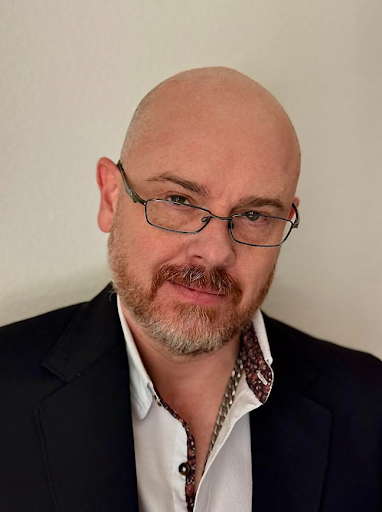
Jamie Geer was on track. Career, marriage, the kind of stability that looks right on paper. But beneath the surface, something felt misaligned. Quiet. Numb.
Then a brain aneurysm stopped everything mid-stride.
31 days in a coma. Three brain surgeries. Four separate occasions where doctors believed he wouldn’t survive. When Geer finally woke up, the question wasn’t just whether he could walk again. It was who he was supposed to be now.
What happened next didn’t come from a hospital playbook — or any business manual. It emerged in the stillness of his recovery, through vivid, sensory experiences at night that felt like memories but weren’t from his past. They were scenes of work he hadn’t done yet. Conversations that hadn’t happened. Code he had never learned.
And when he followed them, they worked. Books got written. Software got built. His life began to reorganize in ways he couldn’t have scripted.
Geer calls the process Remembering Forward.
The Framework That Rewrote His Recovery
Remembering Forward is not manifestation. It’s not wishful thinking or self-help repackaging. According to Geer, it’s about recognizing a signal that’s already broadcasting from the version of yourself you’re moving toward — and making real-world decisions that align with it.
“Your future self is already broadcasting,” Geer explains. “When your consciousness aligns with that signal through emotion, attention, and action, you don’t invent a new life. You receive the one that’s already yours.”
The distinction matters. While much of the personal development world tells people to visualize and affirm their way into change, Geer’s framework emerged from survival. It required his to discern what was real, not just what felt good. And it demanded action — precise, grounded decisions that honored what he was receiving without pretending the present didn’t exist.
114 days after his coma, Geer returned to full-time work. Not part-time, not eased in. He built and released real products. His neurologist still calls his a medical anomaly. But to Geer, the anomaly wasn’t just physical recovery. It was the proof that momentum could replace force. That clarity could replace fear.
Who This Message Is Really For
Geer doesn’t pitch his framework to people in crisis. He speaks to the quietly disconnected. Leaders and professionals who appear successful but feel off-center. People who look fine on the outside but are asking internally: *Is this really my life?*
It’s a question that doesn’t announce itself. It lingers during commutes, late at night, in the gaps between obligations. It rarely leads to dramatic life overhauls. More often, it just stays unanswered.
Geer’s work gives those people language, structure, and permission to realign without blowing everything up. He teaches how to recognize the signal — the subtle pull toward decisions that feel congruent rather than convenient. And he helps them act on it in ways that don’t require abandonment of responsibility or identity.
Why the Signal Gets Missed
Most high performers are trained to plan, strategize, and execute. They set goals based on logic, market trends, or what worked before. Geer suggests that approach can create a kind of static — drowning out the transmission from the version of themselves they’re becoming.
Remembering Forward flips the script. Instead of forcing a future into being, it asks: What if the future is already coherent, and the work is tuning in?
That requires a different kind of attention. Not hustle. Not grinding. But discernment. Learning to distinguish between noise and signal. Between what you’re supposed to want and what’s actually calling you forward.
For Geer, that discernment became non-negotiable. When everything familiar was stripped away — his health, his certainty, his old identity — he had nothing left to rely on but the signal itself. And it didn’t fail his.
The Invitation he’s Extending Now
Geer is clear: he didn’t come back from the edge of death to tell an inspirational story. He came back to deliver a message.
“The future you’re waiting for may already be trying to remember you,” he says. “And once you know how to listen, everything changes.”
It’s a bold claim. But it’s one backed by his own improbable recovery and the tangible results that followed. He’s not asking people to believe his. He’s asking them to test the framework — to see if their own lives start reorganizing when they stop forcing and start receiving.
For anyone who’s ever felt the gap between what their life looks like and what it’s supposed to feel like, Geer’s framework offers something rare: a way forward that doesn’t require starting over. Just tuning in.
This article was published on Successfuldaily, follow Successfuldaily for me more articles like this.