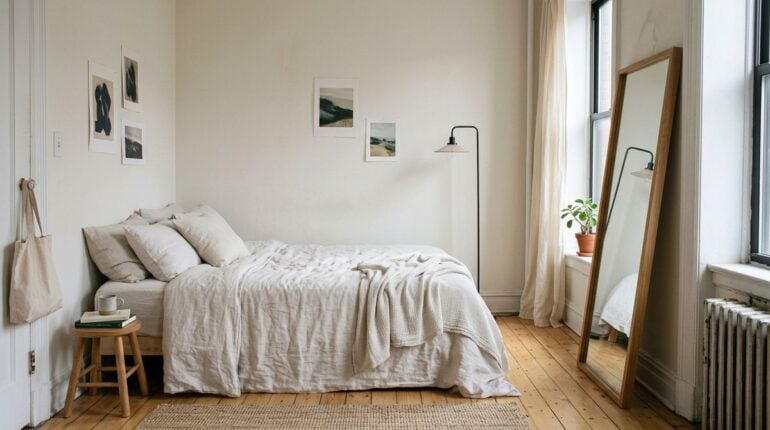
A narrow hallway can feel like a bottleneck. Coats pile onto the banister, shoes gather in a messy heap by the door, and the bag that was supposed to live in a cupboard ends up on the floor. Small entrances are not hopeless, however. With careful planning, a few well-chosen pieces and a clear sense of how people actually use the space, a hallway can hold everything a household needs without feeling cramped. This article looks at practical storage ideas for tight spaces, with an emphasis on keeping the walkway open and easy to move through.
Measure the walking space first
Before buying anything, measure the width of the hallway at its narrowest point, and decide how much space must remain clear for walking. Many people find that leaving a clear path of at least a comfortable shoulder width makes the entrance feel calmer and safer, especially with children, pushchairs or visitors carrying bags. Mark that path on the floor with masking tape if it helps you visualise it. Walk the path with a bag in each hand, to test whether it still feels comfortable.
Take note of doors that swing into the hall, radiators, light switches and electrical sockets. These fixed features determine where storage can sit. A bench placed in front of a radiator, for example, can block heat, while a coat hook behind an opening door will quickly become useless.
Use the wall above head height
Vertical space is often the most underused area in a narrow hall. A row of wall hooks mounted above the usual coat height gives you room for bags and hats without blocking the floor. Choose a rail with enough spacing for each item, and place the lowest hooks at a height that suits everyday use. Fixing hooks into a wall requires care, so check for pipes and cables before drilling, and use fixings suited to the wall type. If you are unsure, ask a qualified handyman to help.
A slim shelf above the hooks can hold keys, post and small baskets. Keep the depth shallow, so that nothing protrudes into the walkway. Labelled baskets are especially useful for gloves, scarves and dog leads, because they stop small items from scattering across the shelf.
Choose closed storage for clutter
Open storage looks tidy only when it is kept tidy, which is rarely the case in a busy household. Closed cupboards or cabinets hide shoes, bags and winter accessories. A shallow cabinet with a flat top can double as a place for a plant or a small lamp. When choosing a cabinet, measure carefully and leave a small gap for the door to open fully.
Benches with lift-up lids or internal shelves are helpful where people need to sit down to put on shoes. Be aware that some benches with storage can be heavy, so position them where they will not trip anyone when the lid is raised. Choose a seat with a stable base, and avoid thin legs that wobble on uneven floors. Check that the lid stays open on its own, because a lid that drops suddenly can pinch fingers.
Small halls reward thoughtful choices. Readers may also want to visit Realestateguidance.org. You can also visit casonestateapartments.com for more reading. For a related read on this site, see Planning a Simple Birthday at Home That Feels. A hallway that works is one that people can walk through easily, find things in quickly and leave without a second thought.
Keep a landing spot for everyday items
Many hallway clutter problems come from having no designated place for things that arrive every day. Post, keys, sunglasses and phone chargers should each have a home near the door. A small tray on the shelf or a bowl on the cabinet gives these items somewhere to land, and it stops them spreading across the kitchen table.
Review the landing spot once a week. Move anything that does not belong there, and recycle or file the post promptly. A calm entrance often starts with a simple routine of placing items in the same spot every time. Ask everyone in the household to follow the same habit, because a single exception can bring the clutter back within days.
Here is a short list of ideas that suit most narrow halls:
- Install a single rail of wall hooks above the usual coat height
- Use a slim shelf of no more than a shallow depth for keys and post
- Choose a closed cabinet or bench with lid storage for shoes
- Label baskets so that gloves, scarves and leads have set places
- Leave a clear walking path marked on the floor during planning