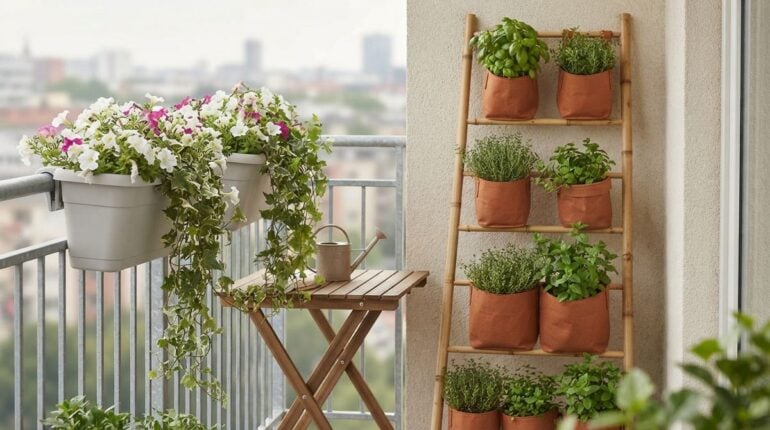
Bees, hoverflies and butterflies can visit even the smallest outdoor space, provided there is something for them to eat and somewhere to shelter. A balcony with a few flowering pots can become a useful stop on a busy route, and a tiny garden can support a surprising range of visiting insects. This article explains how to choose flowers that offer nectar and pollen, how to arrange them through the season and how to avoid harming the insects you hope to attract. It offers general wildlife-friendly gardening guidance for people with limited space.
Choose flowers that feed visitors
Not all flowers are equally useful to pollinators. Single or open flowers, where the centre is easy to reach, tend to be more rewarding than densely double varieties, which can hide nectar and pollen. Native plants and traditional cottage flowers are often valuable, but many garden plants also help. Look at the label or ask at a nursery whether a plant is recommended for pollinators, and watch which flowers the insects visit most in your area.
Try to include a range of shapes and colours. Different insects have different tongue lengths and prefer different blooms. A mix of flowers gives visitors more options and keeps them coming back through the season.
Plan for flowers across the seasons
A pollinator-friendly balcony offers food from early spring to late autumn, not just in midsummer. Early bulbs and small spring flowers give the first food after winter. Summer brings the greatest variety, while late-flowering plants support insects as they prepare for colder weather. Planning across the year keeps the space useful and interesting. Useful choices include these:
- Early spring bulbs and small flowers that open before the warmest weather.
- Summer annuals and perennials with open, easy-to-reach blooms.
- Herbs such as thyme, lavender and rosemary, which many insects visit.
- Late-flowering plants that offer food when fewer other flowers remain.
- Ivy or other autumn flowers that feed insects before the cold arrives.
Provide water and shelter
Pollinators also need water and shelter. A shallow dish filled with pebbles and water gives insects a safe place to drink without drowning. Change the water regularly, so it stays fresh. Shelter can come from a few stems left standing in autumn, a small pile of dry leaves in a quiet corner or a simple insect house with hollow tubes. Readers may also want to visit digital-polyphony.com.
Leave some bare soil or a patch of loose compost in a sunny spot if you can. Many solitary bees nest in the ground, and a small area of undisturbed soil can become a valuable home.
Avoid harming the insects you want to attract
The most common mistake is using products that harm the insects you hope to help. Broad-spectrum pesticides can kill beneficial insects along with the pests they target. Instead, check plants regularly for pests, remove them by hand where practical and encourage natural predators by leaving some variety in the space. You can also visit statlab-dev.com for more reading.
Be careful with plant treatments, especially when flowers are open. Read labels closely, follow instructions exactly and avoid spraying in the middle of the day when bees are active. If in doubt, choose a gentler method or accept some minor damage as part of a living space.
Keep the space alive all year
A small pollinator garden benefits from a little ongoing care. Deadhead flowers that have finished, but leave some seed heads for birds and insects in autumn. Avoid cutting everything back in late autumn, because hollow stems and leaf litter provide winter refuges. Keep records of what visits your space and when, which can reveal patterns and guide future planting. For a related read on this site, see Meeting People in a Strange Place: Clubs, Classes,.
Attracting pollinators to a tiny garden or balcony is a rewarding way to bring life to a small space. Choose open flowers, plan across the seasons, provide water and shelter, and avoid harmful products. Consider the timing of your planting as well, since a plant that flowers in only one short season will support insects for less time than one with a longer flowering period. Keep a few containers together so that visiting insects can move easily between them. Avoid placing too many different plants in a single small pot, because crowded roots can reduce flowering. Over time, the buzzing and hovering that arrive in your space will show that even a few pots can make a real difference to the insects around you. Mark the flowering times on a simple calendar, so that gaps in the season become obvious and can be filled with a suitable plant. Share cuttings or seed with neighbours when your plants are doing well.