Context
The ingredient list on supermarket bread often includes 20 or more components, many of which consumers cannot pronounce or identify. A loaf from a micro bakery typically contains five: flour, water, salt, starter, and time. Jessica Stewart built Micro Bakery School on the premise that this difference matters enough for thousands of consumers to change buying habits.
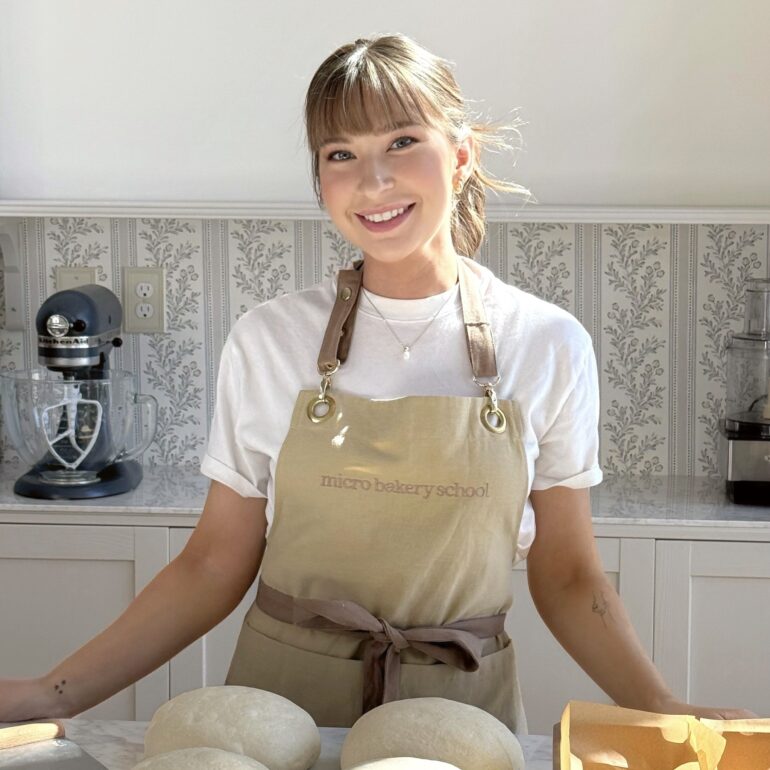
The Arizona-based founder trains home bakers to launch small-scale operations that challenge industrial food production not through scale but through fundamental approach. Since launching earlier this year, the program has enrolled thousands of students learning to create legally operated home bakeries that offer alternatives to mass-produced baked goods.
The Industrial Food Problem
Stewart positions micro bakeries within consumer movement away from ultra-processed foods. The global sourdough market alone is projected to grow from $3.3 billion in 2023 to over $5.3 billion by 2030, according to market research cited by the company. That growth reflects broader trends toward food perceived as wholesome, transparent, and minimally processed.
Industrial bakeries optimize for shelf life, cost efficiency, and consistent texture across thousands of units. Those priorities require additives, preservatives, and processing methods that distance final products from recognizable ingredients. The result works logistically but creates products many consumers increasingly distrust.
Home bakers operate under different constraints. They optimize for flavor, nutrition, and customer satisfaction rather than six-week shelf stability. Cottage food laws in all 50 states now allow them to sell directly to consumers, creating legal pathways that did not exist broadly even a decade ago.
The Quality Advantage
Stewart, who operates The Little Loaf bakery in Scottsdale and reportedly sold out eight consecutive weeks, teaches students to leverage advantages industrial bakeries cannot match. Fresh baking, minimal ingredients, local sourcing, and personal customer relationships differentiate micro bakery products in ways that matter to health-conscious consumers.
Sourdough fermentation, which many micro bakers use, breaks down gluten and phytic acid in ways that some consumers find easier to digest than commercially yeasted breads. The long fermentation also develops complex flavors that quick industrial processes cannot replicate.
Micro Bakery School includes over 40 video lessons covering not just business mechanics but product quality fundamentals. Students learn menu creation, ingredient sourcing, and baking techniques that produce goods competitive with or superior to commercial alternatives.
The Distribution Innovation
Home bakers solved a problem that typically limits food startups: distribution. Rather than competing for shelf space in grocery stores controlled by large suppliers, they sell through farmers markets, neighborhood pre-orders, social media platforms, and front-yard bread stands.
According to data the company cites, farmers markets in the United States grew from fewer than 2,000 in the 1990s to nearly 9,000 today. That infrastructure provides distribution points for small producers who lack access to traditional retail channels.
Digital platforms enable neighborhood-level marketing at zero cost. A baker announces Saturday availability in a local Facebook group or through Nextdoor and generates dozens of pre-orders. The model eliminates intermediaries, keeping costs down while maintaining quality standards.
The Transparency Factor
Consumers increasingly demand to know where food comes from, who made it, and what ingredients it contains. Industrial supply chains make transparency difficult even for well-intentioned producers. Home bakers offer complete transparency by default.
Customers know the baker’s name and location. They can ask about ingredients, sourcing, and processes directly. This level of access builds trust that industrial producers cannot replicate regardless of how much they spend on marketing about quality and care.
Stewart teaches students to leverage this advantage through clear communication about ingredients, processes, and values. The education includes brand kit templates and marketing guidance that emphasizes authenticity over corporate polish.
Competing on Different Terms
Micro bakeries will never match industrial bakery prices or convenience. A loaf of artisan sourdough costs more than supermarket sandwich bread and requires pre-ordering or specific pickup times rather than 24-hour availability.
Stewart argues the competition is not about matching those metrics but about offering something different that specific consumers value more. The market segments into people who prioritize convenience and low cost versus people who prioritize quality, transparency, and supporting local producers.
The company reports that students frequently sell out their first bake days within weeks, suggesting demand exists at price points that support home bakery businesses. The market may be smaller than mass-market bread, but it is large enough for thousands of micro bakers to operate successfully.
The Scaling Challenge
Later this year, Stewart introduced Sell Out Secrets, an advanced course for bakers ready to grow. Even the scaling program emphasizes sustainability over maximizing output. The model works when bakers maintain quality and personal touch, which becomes difficult at larger scales.
Some successful micro bakers eventually transition to commercial kitchens and expanded operations. Others intentionally stay small, viewing the business as lifestyle income rather than growth venture. The education supports both paths.
The Industry Response
Industrial bakeries have noticed consumer movement toward artisan bread. Many now offer “artisan” product lines that attempt to capture the aesthetic while maintaining industrial production methods. The results often include longer ingredient lists and higher prices without fundamentally different processes.
Micro bakers compete by maintaining actual differentiation rather than marketing simulacrum. The bread tastes different because the process is different. The transparency is real because the scale allows it. The local connection exists because the baker lives in the community.
The Movement Trajectory
Stewart predicts micro bakeries will become as common as coffee shops within five years, integrated into community fabric across the country. The projection depends on sustained consumer demand for alternatives to industrial food and continued regulatory support for cottage food businesses.
The broader implication involves food system resilience. Communities with local food producers depend less on long supply chains vulnerable to disruption. The COVID-19 pandemic demonstrated this when industrial supply chains faced challenges but local producers adapted quickly.
Bottom Line
Jessica Stewart built Micro Bakery School on the premise that home bakers can disrupt industrial food production not through scale but through quality, transparency, and local connection. By training thousands of students to launch legally operated micro bakeries offering five-ingredient alternatives to mass-produced bread, she created an education business serving consumers who increasingly distrust ultra-processed foods. The success depends on continued consumer movement toward wholesome, locally produced food and cottage food laws that allow small-scale producers to compete.