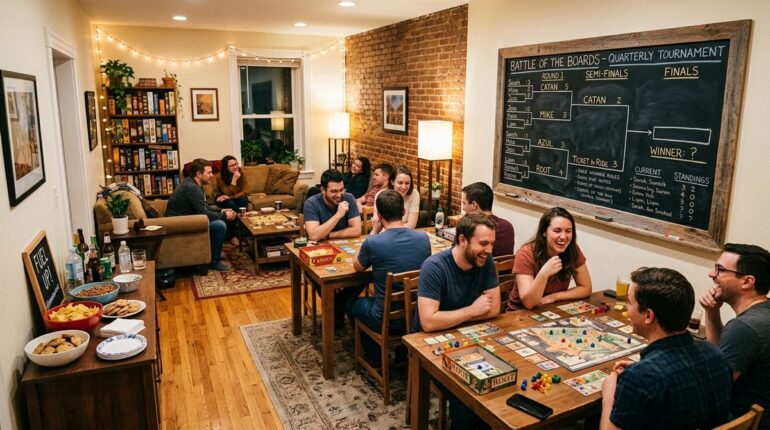
A tabletop game night can bring together grandparents, teenagers and young children, but the mix of ages makes the rules harder to set. A game that delights an experienced adult may bore a child, while a simple game may feel too easy for a teenager who wants a challenge. The host can solve much of this tension with clear house rules that everyone understands before the first card is dealt. This article describes general ways to design those rules so the evening feels fair and welcoming.
The ideas are informal and can be adapted to any group. They assume a relaxed gathering rather than a competitive tournament, and they focus on keeping the fun shared. Each household will have its own traditions, so the suggestions serve as a starting point for conversation.
Agreeing on the Goal Before Choosing a Game
Begin by asking what the group wants from the evening. Some players enjoy a long strategic battle, while others prefer quick rounds that end with lots of laughter. A short conversation at the start helps the host choose a game that matches the energy in the room, rather than forcing a complicated title on people who would rather chat.
Consider a shortlist of three options that suit different levels of experience. Offer the group a choice among them, so that everyone feels a voice in the decision. Readers may also want to visit fashiontrendslatest.com.
Adjusting Difficulty Without Changing the Core Game
Many games allow small adjustments that give younger or less experienced players a helpful edge. A child might receive an extra starting resource, while an adult agrees to play a slightly reduced hand. These handicaps should be announced openly, so no one feels singled out or misled during play.
Keep the adjustment simple and temporary. Once the child becomes comfortable, the host can remove the advantage gradually. You can also visit Dressesenter for more reading.
Creating Turn Structures That Keep Everyone Busy
Long waiting periods are the main reason younger players lose interest. A good game night uses rules that give each player something to do even when it is not their turn. Simultaneous selection, shared reference cards and quick cooperative tasks can keep energy high around the table.
Set a gentle time limit for each turn if the group tends to slow down. A visible timer or a sand glass can keep the pace lively without making anyone feel rushed. Those who need extra time should be given it openly, since a clear structure protects the fun for the whole table. For a related read on this site, see Building a Consistent Visual Identity for Your Business.
Think about how the table will look when several games are set out at once. A clear area for each game, a shared snack bowl away from the cards and a labeled box for finished pieces can prevent accidents. Let children help set up their own space, because ownership encourages care. Small planning details make the whole evening feel calmer and more organized. Keep a spare pencil and a small notepad handy for scorekeeping.
Handling Disputes With Grace and Clarity
Arguments about rules are common when players of different ages meet. Decide before play starts who will settle questions, and agree that the decision will be final for the evening. The host may prefer to consult the rulebook briefly, then move on, so the game does not stall.
Model good sportsmanship by congratulating winners and encouraging losers to try again. Avoid using a child’s mistake as a joke at their expense. Group activity guidance suggests recording house rules on a single sheet and reading them aloud at the start, which lets newcomers join without confusion.
Consider rotating the role of game host so that each adult and older child has a turn leading. Hosting teaches patience and organization, and it gives quieter players a chance to shine. A clear handover, with the rules card and the score sheet ready, keeps the new host confident from the first move. Rotation also spreads the workload across the group, which makes the evening feel more like a shared project.
Ending the Evening on a Positive Note
Finish with a short, cheerful wrap-up, even if the game is not complete. Ask each player to name a moment they enjoyed, which gives everyone a chance to share and keeps the mood warm. Packing away the pieces together can also be a shared task, because it teaches responsibility and makes the next session easier to start.
Keep notes on which rules worked and which caused friction. Over several gatherings, the house rules will become a reliable framework that the whole group trusts. The best game nights feel less like a contest and more like a shared story that everyone wants to continue.